OUR IMPACT
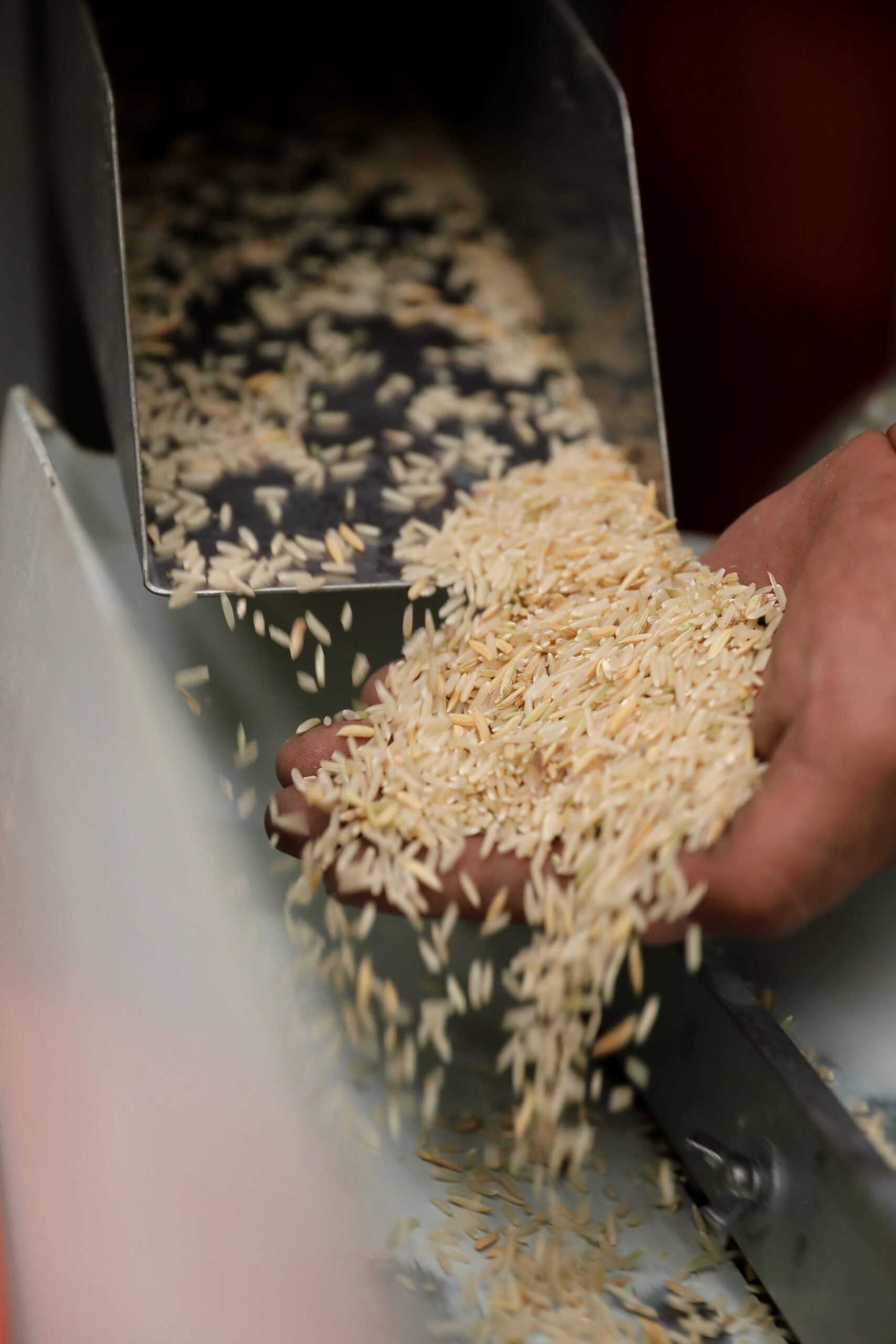
For us, rice is more than a commodity—it is a responsibility. Every grain we export carries the story of our commitment to the land, the people who cultivate it, and the future they depend on.
Sustainable Journey
Community Development & Ethical Sourcing
- Fair Price Premiums
- Direct partnerships with farming families
- Support for local infrastructure (roads, water tanks)
- Healthcare initiatives.
- Farmer Stories: Profiles of partner farmers, with quotes and photos. Show their families and farms.
- Impact Metrics: “98% of our rice is sourced through direct, long-term contracts guaranteeing farmers a 100% premium above market price.”
- Case Study: A short article or video on how premium income helped a village build a new school clinic or clean water system.
Sustainable & Regenerative Agriculture
- Organic certification,
- Reduction/elimination of chemical pesticides
- Use of natural fertilizers (compost, manure)
- Crop rotation
- Integrated Pest Management (IPM)
- Integrated Pest Management (IPM): Using birds, fish (in flooded fields), or beneficial insects to control pests. Applying pesticides only as a last resort, and choosing targeted, bio-friendly options.
- “Our Farming Methods” Page: Explain IPM, crop rotation, and soil health in simple terms with icons or infographics.
- Comparison: A respectful, non-greenwashing comparison showing how your methods differ from conventional ones (e.g., water usage, soil carbon content).
- Alternate Wetting and Drying (AWD): Instead of constant flooding, fields are allowed to dry slightly before re-irrigation. It can reduce water use by 25-30% with no yield loss.
- Integrated Pest Management (IPM): Using birds, fish (in flooded fields), or beneficial insects to control pests. Applying pesticides only as a last resort, and choosing targeted, bio-friendly options.
Environmental Stewardship & Biodiversity
- Water conservation (flooded vs. alternate wetting & drying)
- Wetland preservation
- Planting of native trees/bee-friendly plants
- Protection of local wildlife
- Carbon footprint reduction programs.
- Water Stewardship Explanation: A diagram or short video explaining your water-saving techniques.
- Wildlife Gallery: Beautiful photos of birds, frogs, and insects thriving in your paddy fields. Title it “Biodiversity in Our Fields.”
- Partnerships: Mention any partnerships with local environmental NGOs.
Beyond the Grain
For us, true cultivation is not just measured in yield, but in legacy.
How We Grow: Regenerative Farming.
First, frame your approach not just as “doing less harm” (sustainable), but as actively improving the farm ecosystem (regenerative). This is a more powerful and modern concept.
Global certifications (BRC, IFS, Organic, Non-GMO), in-house quality labs, blockchain or batch-level traceability, HACCP plans.
Scholarships for farmers' children, building/renovating schools, providing digital tools/tablets for rural schools, adult literacy programs.
Development of drought/flood-resistant rice varieties, investment in renewable energy (solar dryers, biogas), R&D into low-emission farming techniques, weather insurance for farmers.
Commitment to growing native/heirloom rice varieties, support for traditional festivals and cultural practices, partnerships to safeguard culinary heritage.